
Recording remote interviews using Zoom
Many podcasters use Zoom.us to record their sessions if the co-host or interviewee is not in the same location. Zoom gives you higher audio quality than you’ll get on a regular phone call, and it allows you to make calls with multiple people at once.
If you are doing this as an in-person workshop, please ask the instructor for assistance if you get stuck on any of the follwing steps.
Zoom free vs paid
Zoom saves some of its features for the paid versions, but with the free version, here are the relevant features and limits for audio recordings:
- meetings are capped at 40 minutes in duration
- host up to 100 participants
- no cloud storage, so ensure that you have enough local (on your own computer) storage prior to recording
For most podcasters, the free version of Zoom will suffice. You can work around the free version’s time limit by logging off after 40 minutes and restarting the meeting. But, if you need to assign co-hosts, or “break out rooms,” then you will need the paid version.
See the Zoom.us pricing page for more information on the different versions.
To download Zoom, go to the Zoom.us website and click on the blue Sign Up Free button on the top right of the window.
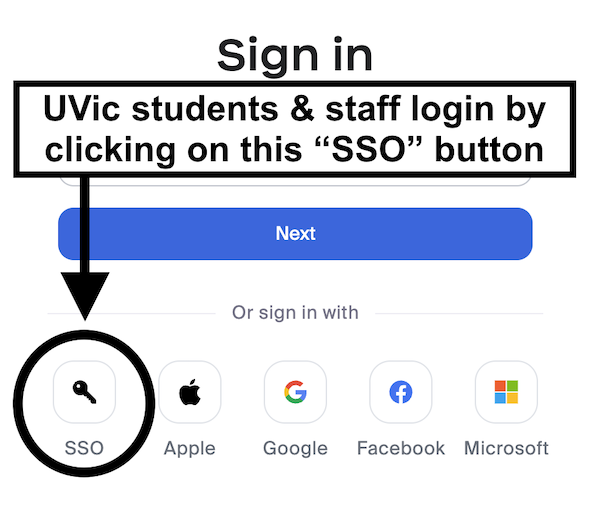
NOTE that current UVic students and staff have access to the paid version of Zoom. To access the paid version, you must login using the “SSO” button. From there, you will asked for yout Netlink ID and password to complete the login.
Zoom settings for interviews
Before you record your interview, you need to setup some things in Zoom.
These steps assume that you have the Zoom application already installed.
- On your computer, open the Zoom app and sign in.
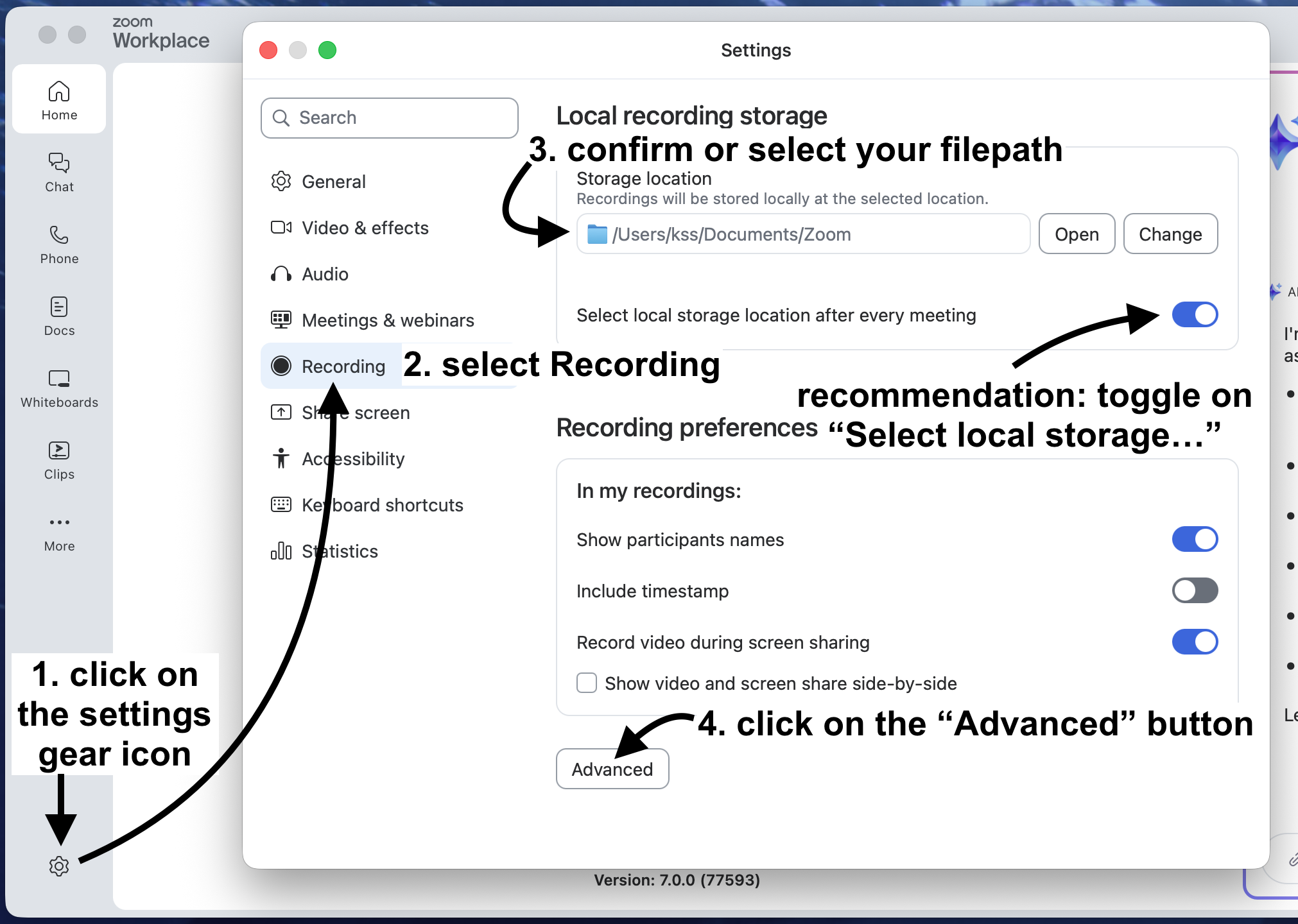
- Click your profile picture, then click Settings. Or, in Zoom versions 6.7.0 and higher, click on the gear icon at the bottom of the left menu (in the Zoom dashboard window).
- Click on the “Recording” tab on the left of the Settings window.
- In the Recording settings, confirm or select your filepath. This will set the location of your stored recordings.
TIP: we recommend that you toggle on the “Select local storage…” switch. Doing so will ensure, once your call finishes, that a pop-up window will appear to ask you to specify a folder location to store your recording.
- Click on the “Advanced” settings button.
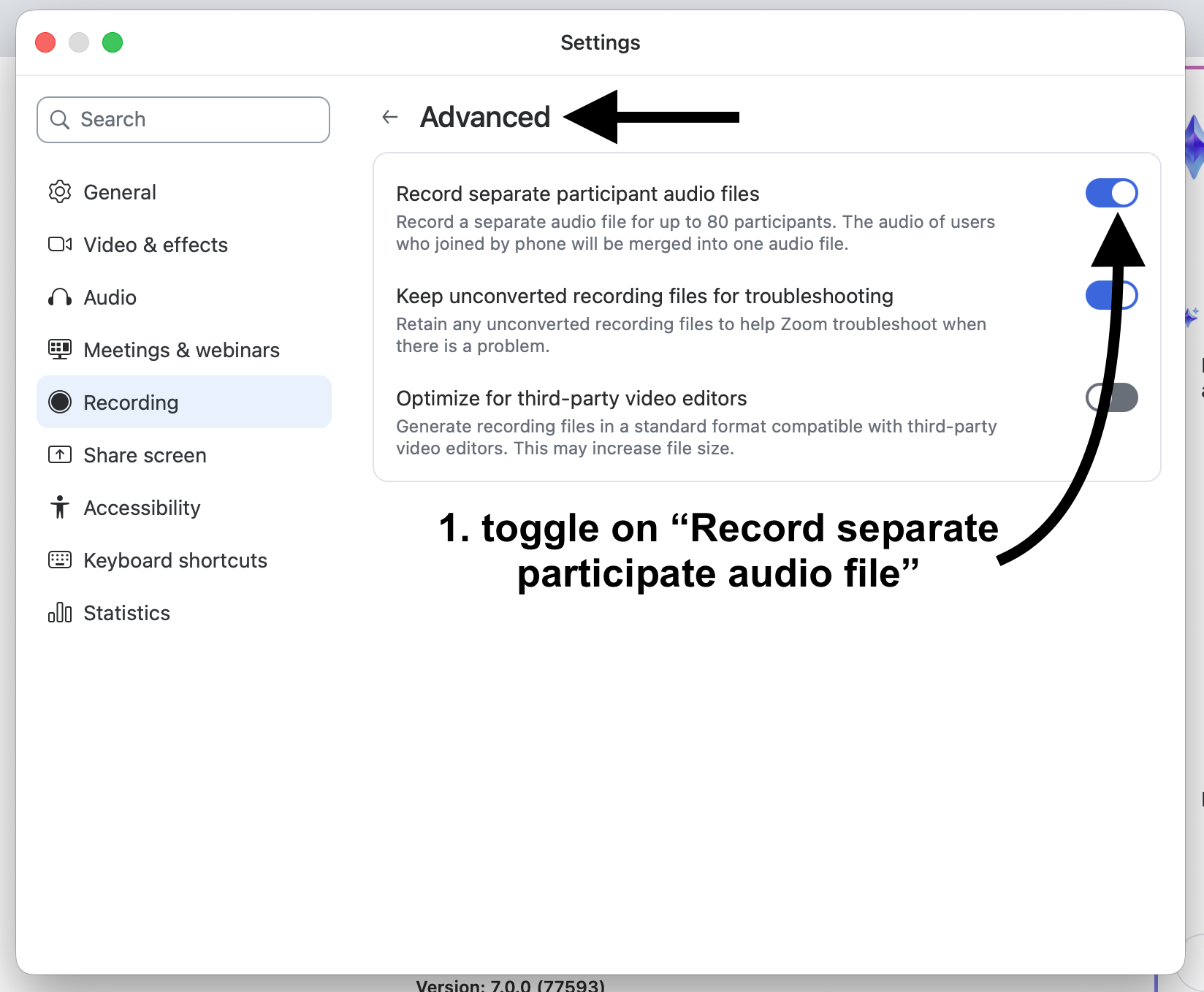
- In Advanced settings, toggle on the “Enable Record a separate audio file for each participant” switch.
Here’s a visual walk-through of the above steps. Note that these images are from Zoom installed on a Mac computer:
Advanced settings:
Interviewing with Zoom
- In a web browser, navigate to Zoom’s login page, https://zoom.us/signin#/login, and log in.
- In the top right of Zoom’s dashboard page, click on the Host menu and select “With video on” or “With video off,” depending on your preferences. Note that recording video will increase the local file storage requirements considerably.
- Click on the Open zoom.us button within the Zoom popup. This launches the Zoom program on your computer with your laptop’s camera turned on.
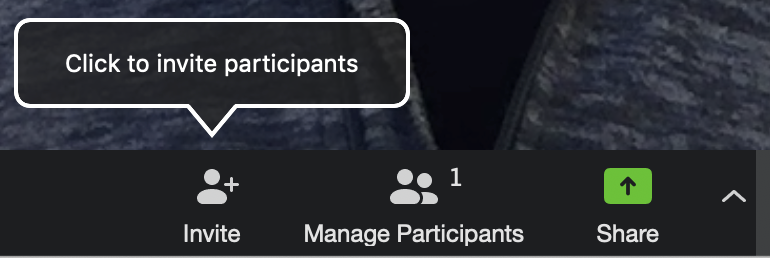
- Click on the Invite button at the bottom of the window, and then click on the Copy URL text on the bottom left of the screen.
- Message your interviewee, either by email or instant message, and paste in the URL you just copied, which will look something like this: https://zoom.us/j/532670881?pwd=Yyt3ZVZjQ2VFdzBCd21wN2s2QUVGUT09. When your interviewee clicks on the link it will ask them if they would like to join your meeting.
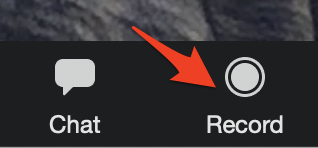
- Once they have joined your meeting, let them know that you are going to start recording, and then click on the Record button on the bottom right of the Zoom window.
Tips
- If you haven’t already, put on some headphones so that you can make sure that the audio levels from your end and your interviewees end sound good.
- You may need to adjust your audio input settings, and you may need to walk your participant through how to do the same. See Zoom’s support page for tips on how to do this for your system: Testing your audio settings for Zoom meetings.
- Once everything sounds good in Zoom, start your interview proper, and officially welcome your guest.
- You can always edit out the introduction where you are getting everything set up, but you never know, you might record something interesting with your interviewee while taking care of pre-podcast technical details.
Ending interviews and importing interview audio into Audacity
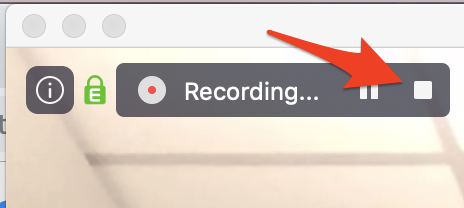
- To end the recording of the interview mouse over the Recording text on the top left of the Zoom screen (see right) and then press the white square stop icon.
- End the meeting by pressing the red End Meeting text at the bottom right of the Zoom screen (you may need to move your mouse to the Zoom screen to see the text). A dialogue box will appear. Press the End Meeting for All button.
- Another dialogue box will appear asking you where you want Zoom to save the recordings from the meeting on your local hard drive. Select a location where you will be able to easily find the files and press the Save button. A folder with the location you selected should now appear.
- Open Audacity. Then, drag and drop the M4A audio file (stored in the folder that Zoom opened for you) into Audacity. If you get an error message when you import the M4A file, you will need to install FFmpeg. See our Installing FFMpeg instructions for more.
Now you’re ready to edit the interview in Audacity.
Great job and happy interviewing!